
In today's interconnected business landscape, IT vendors are no longer mere suppliers; they are critical extensions of your team, integral to your security, compliance, and operational success. For small to midsize businesses and regulated organizations, like those in healthcare or finance, the stakes are even higher. A single misstep in managing a vendor relationship can lead to costly data breaches, compliance failures under regulations like HIPAA or PCI, or crippling downtime.
Conversely, a well-managed vendor ecosystem is a powerful competitive advantage that drives innovation, enhances security posture, and creates operational efficiency. Effective vendor management is a strategic discipline that mitigates risk while maximizing the value derived from third-party partnerships. This guide moves beyond generic advice to provide a comprehensive roundup of the most critical it vendor management best practices. We'll deliver actionable strategies, from initial selection and due diligence to robust security assessments and strategic offboarding.
This listicle is designed to help you build resilient, secure, and value-driven vendor relationships. We will explore how to establish clear selection criteria, implement comprehensive Service Level Agreements (SLAs), and develop a formal risk management framework. Our goal is to equip you with the tools and knowledge needed for a successful vendor program. While this article provides a detailed roadmap, you may find additional perspectives valuable. To further enhance your understanding, other resources discussing 10 vendor management best practices can offer complementary insights into building these strategic partnerships. This isn't just about cutting costs; it's about building a robust framework for long-term operational and security success.
1. Establish Clear Vendor Selection Criteria
One of the most foundational IT vendor management best practices is creating a structured and objective vendor selection framework before you begin your search. This process involves defining specific, measurable criteria that potential partners must meet. By formalizing your requirements upfront, you transform vendor selection from a subjective, gut-feel decision into a data-driven business process, significantly reducing the risk of selecting a partner who is a poor fit for your technical, financial, or compliance needs.

This proactive approach forces internal alignment on what truly matters in a partnership. It ensures that critical aspects like security protocols, support responsiveness, and scalability are not overlooked in favor of a low price tag. For regulated organizations, this step is non-negotiable, as it creates an auditable trail demonstrating due diligence in protecting sensitive data.
How to Implement a Vendor Selection Framework
A practical way to implement this is by creating a weighted scoring matrix. This tool allows for consistent evaluation across all potential vendors, making comparisons clear and justifiable.
- Assemble a Cross-Functional Team: Involve stakeholders from IT, security, procurement, legal, and the primary business unit that will use the service. Each department brings a unique and vital perspective.
- Define Core Criteria Categories: Group your requirements into logical categories. Key areas should include:
- Technical Capabilities: Alignment with your existing tech stack, scalability, and feature set.
- Security & Compliance: Certifications (e.g., SOC 2, ISO 27001), data encryption standards, and experience with regulations like HIPAA or PCI DSS.
- Financial Viability: The vendor's financial health and stability.
- Support & SLAs: Guaranteed response times, support channels (phone, email, chat), and escalation procedures.
- Pricing Structure: Transparency, total cost of ownership, and contract flexibility.
- Assign Weights and Score: Assign a weight to each category based on its strategic importance. For example, a healthcare provider might assign a 30% weight to "Security & Compliance." Then, score each vendor on a 0-5 scale for every criterion. This provides a quantifiable basis for your final decision.
- Conduct Thorough Reference Checks: Speak with 3-5 of the vendor's current clients, preferably organizations of a similar size and industry. Ask specific questions related to your highest-weighted criteria.
2. Implement Comprehensive Service Level Agreements (SLAs)
Beyond the initial contract, one of the most critical IT vendor management best practices is establishing a robust Service Level Agreement (SLA). An SLA is not just a technical appendix; it is a legally binding document that defines the specific, measurable performance standards a vendor must uphold. It transforms vague promises of "good service" into concrete metrics for uptime, support responsiveness, and problem resolution, creating clear accountability and a mechanism for recourse when service falters.
For regulated organizations, a detailed SLA is essential for demonstrating due diligence and ensuring that vendor performance aligns with compliance mandates. It provides the assurance that critical systems will be available and that security incidents will be addressed within a predefined, acceptable timeframe. Without a strong SLA, you are essentially relying on a vendor's goodwill, which leaves your business operations and data exposed to unnecessary risk.
How to Structure an Effective SLA
A well-crafted SLA protects your business by setting clear expectations and defining consequences. It should be a collaborative document, but one that is ultimately driven by your business requirements.
- Define Key Performance Metrics: Go beyond generic uptime. Specify metrics relevant to your operations, such as:
- Availability (Uptime): Define this as a percentage (e.g., 99.95%) and clarify what is excluded, like scheduled maintenance windows.
- Response Time: The time it takes for a vendor to acknowledge a support request (e.g., 15 minutes for a critical issue).
- Resolution Time: The maximum time allowed to resolve an issue based on its severity level.
- Data Recovery Point Objective (RPO): The maximum acceptable amount of data loss after an incident.
- Establish Tiered Service Levels: Not all issues are equal. Create a priority matrix (e.g., Critical, High, Medium, Low) that dictates the required response and resolution times for each level. This ensures urgent problems receive immediate attention.
- Include Penalty and Credit Clauses: The SLA must have teeth. Specify service credits (e.g., a 10% credit on the monthly fee if uptime falls below 99.5%) that are automatically applied for performance failures. This incentivizes the vendor to consistently meet their commitments.
- Incorporate Reporting Requirements: Mandate that the vendor provide regular, transparent performance reports. These reports should track performance against all defined SLA metrics, allowing you to proactively manage the relationship and verify that you are getting the service you paid for.
3. Develop a Vendor Risk Management Framework
Beyond initial selection, one of the most critical IT vendor management best practices is establishing a formal Vendor Risk Management (VRM) framework. This systematic process involves identifying, assessing, and mitigating potential risks that a third-party partner introduces to your organization. By formalizing this process, you move from a reactive, crisis-driven approach to a proactive, strategic posture, safeguarding your business against financial instability, security breaches, and operational disruptions caused by vendor failures.
This framework is essential for regulated industries like healthcare or finance, where vendor compliance directly impacts your own. For instance, a healthcare provider must conduct thorough HIPAA risk assessments on any vendor handling protected health information (PHI). A robust VRM program provides the structure and documentation necessary to demonstrate due diligence to auditors and regulators, protecting your organization from significant penalties.
How to Implement a Vendor Risk Management Framework
A practical way to implement this is by tiering vendors and applying risk controls based on their criticality to your operations. This ensures you focus your resources where the potential impact is greatest.
- Categorize Your Vendors: Not all vendors pose the same level of risk. Classify them into tiers based on their business impact and access to sensitive data. A common model includes:
- Critical: Essential for business operations; failure would cause significant disruption (e.g., your cloud infrastructure provider).
- Important: Supports key business functions but has alternatives (e.g., your marketing automation platform).
- Routine: Low-impact, easily replaceable vendors (e.g., office supply company).
- Conduct Tier-Based Risk Assessments: The depth of your assessment should align with the vendor's tier. For critical vendors, this includes:
- Security Audits: Review their security posture and perform penetration tests if necessary. Understanding third-party risk is a cornerstone of the importance of cybersecurity for growing businesses.
- Financial Health Reviews: Check credit ratings and financial statements quarterly to ensure viability.
- Compliance Verification: Confirm they hold necessary certifications (e.g., SOC 2, HIPAA) and meet regulatory requirements.
- Establish Monitoring and Escalation Triggers: Create a vendor scorecard to continuously track performance, risk metrics, and compliance. Define clear triggers for action, such as a security incident, a missed SLA, or a sudden credit downgrade, and outline the corresponding escalation path.
- Develop Contingency Plans: For every critical vendor, create and maintain a documented contingency or exit plan. This plan should detail the steps to transition to an alternative provider or bring the service in-house with minimal disruption.
4. Create a Formal Contract Management Process
Moving beyond selection, one of the most critical IT vendor management best practices is establishing a formal process for the entire contract lifecycle. This involves standardized procedures for drafting, negotiating, executing, and managing vendor contracts from inception to termination. A robust contract management process transforms agreements from static legal documents into active management tools, ensuring all parties adhere to their commitments and protecting your organization from legal and financial risks.

Without this structure, organizations often face missed renewal deadlines, overlooked service obligations, and inconsistent terms across their vendor portfolio. For regulated industries like healthcare and finance, this ad-hoc approach can lead to compliance violations and audit failures. Formalizing the process ensures key clauses related to security, liability, and data handling are consistently applied, creating a defensible and transparent operational framework.
How to Implement a Formal Contract Management Process
Implementing a Contract Lifecycle Management (CLM) framework doesn't have to be overly complex. The goal is to create consistency, visibility, and control over your vendor agreements.
- Develop Standardized Templates: Create 3-5 master service agreement (MSA) templates tailored for different vendor types (e.g., SaaS, hardware, professional services). Include pre-approved, non-negotiable clauses for critical areas like data security, intellectual property rights, and liability limits. This drastically speeds up negotiations and reduces legal review cycles.
- Establish Clear Approval Workflows: Define and automate the steps for contract review and approval. Ensure that stakeholders from Legal, IT, Security, and Finance review every agreement before execution. This prevents siloed decisions and ensures all organizational requirements are met.
- Utilize a Centralized Repository: Store all contracts, amendments, and related documents in a single, secure, and searchable location. Contract management platforms like those offered by Coupa Software or Icertis are ideal, but even a structured cloud storage system is better than scattered files. This ensures version control and easy access for audits.
- Implement Automated Tracking and Alerts: Use a CLM tool or calendar system to set automated reminders for key dates, such as contract renewals, price adjustments, and performance reviews. Set renewal alerts for 90-120 days before expiration to provide ample time for renegotiation or finding an alternative vendor.
- Document Everything: Every change, amendment, or verbal agreement must be documented in writing and formally added to the contract file. This creates an auditable trail and prevents disputes arising from misremembered conversations.
5. Establish Regular Performance Reviews and Scorecards
One of the most critical IT vendor management best practices is shifting from a "set it and forget it" mindset to one of continuous monitoring and structured evaluation. Implementing regular performance reviews and vendor scorecards transforms your relationship management from reactive problem-solving into a proactive, data-driven process. This systematic approach ensures that vendors consistently meet their contractual obligations and align with your evolving business objectives.
This practice creates a transparent and objective framework for assessing vendor value. It provides a formal mechanism for addressing underperformance before it escalates into a major business disruption and identifies opportunities for strengthening partnerships with high-performing vendors. For regulated industries like finance or healthcare, these documented reviews serve as crucial evidence of ongoing due diligence and risk management.
How to Implement Vendor Performance Reviews and Scorecards
Creating a repeatable, scalable review process is key. A balanced scorecard combines quantitative metrics with qualitative feedback, offering a holistic view of vendor performance.
- Define Key Performance Indicators (KPIs): Collaborate with internal stakeholders to select the most important metrics. These should directly reflect the vendor's impact on your business and security posture.
- Create a Weighted Scorecard: Build a simple scorecard that covers core categories. Assign a weight to each category based on its importance to your organization. For example:
- Security & Compliance (40%): Adherence to security protocols, incident response time, and audit cooperation.
- Service Delivery & Uptime (35%): Meeting SLA targets for availability, latency, and system performance.
- Support Quality (25%): Ticket resolution time, support staff expertise, and user satisfaction feedback.
- Establish a Review Cadence: The frequency of reviews should align with the vendor's criticality.
- Monthly Check-ins: For critical vendors, review tactical KPI data and open support issues.
- Quarterly Business Reviews (QBRs): Conduct a formal review of the scorecard, discuss strategic alignment, and plan for the upcoming quarter.
- Be Transparent and Collaborative: Share the scorecard with your vendor during each review. Use it as a tool for constructive dialogue, setting clear expectations for improvement where needed and recognizing areas of excellence.
6. Implement Security and Compliance Assessment Programs
Moving beyond initial due diligence, one of the most critical IT vendor management best practices is establishing a formal, ongoing program to assess your vendors' security posture and regulatory compliance. This involves a structured process for evaluating data protection practices, reviewing certifications, and confirming their incident response capabilities. This formal assessment program acts as a continuous verification of the promises made during the selection phase, ensuring that a vendor remains a secure and compliant partner throughout the relationship.
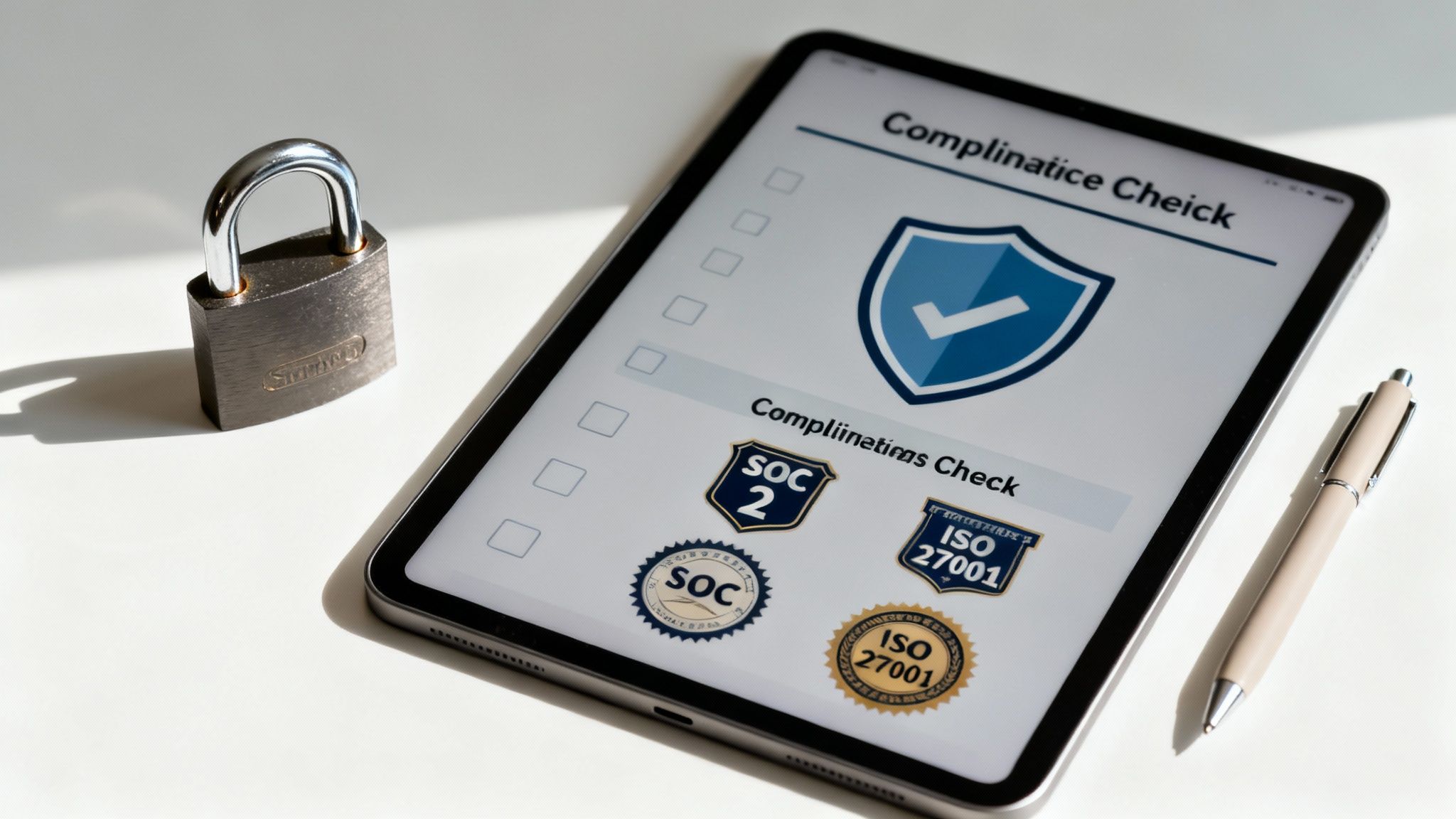
For organizations in regulated industries like healthcare or finance, this isn't just a best practice; it's a mandatory requirement for maintaining their own compliance. A vendor’s security failure can quickly become your data breach and regulatory nightmare. A systematic assessment program provides the evidence needed to demonstrate due diligence to auditors and protect your business from third-party risk. For more details on this, you can explore our comprehensive cybersecurity services.
How to Implement a Security Assessment Program
A robust program combines documentation review with proactive verification. This ensures you have a comprehensive view of a vendor's security and compliance maturity.
- Utilize Standardized Questionnaires: Deploy industry-standard security questionnaires like the SIG (Standardized Information Gathering) or CAIQ (Consensus Assessments Initiative Questionnaire). This streamlines the data collection process and makes it easier to compare responses across different vendors.
- Verify Certifications and Audits: Do not just take a vendor's word for their compliance. For critical cloud service providers, require a SOC 2 Type II report and review it for exceptions. For vendors in specific regions, understanding how they achieve regional standards is crucial. For example, to ensure robust security and compliance, it is vital to understand how vendors like ServiceNow achieve complete ServiceNow's SAMA Cybersecurity Framework compliance.
- Schedule Periodic Reviews: For high-risk vendors, conduct security and compliance reviews annually. This review should include re-submitting questionnaires, requesting updated certifications, and discussing any changes to their security program or data processing activities.
- Integrate into Contractual Agreements: Your contracts must include the "right to audit" clause and specify requirements for data breach notifications, including timelines and communication protocols. This gives you the legal leverage to enforce your security standards.
7. Build Strategic Partnerships Through Relationship Management
One of the most transformative IT vendor management best practices is shifting from a purely transactional mindset to one of strategic partnership. This means cultivating relationships built on mutual trust, transparency, and shared goals, rather than just cost and contract terms. Treating critical vendors as extensions of your own team unlocks significant value beyond the stated service, fostering innovation, improving service quality, and increasing resilience.
A transactional relationship focuses on fulfilling the contract; a strategic partnership focuses on achieving business outcomes. When a vendor understands your strategic roadmap, they can proactively suggest solutions, provide early access to new technology, and offer more flexible support during a crisis. This collaborative approach turns a simple service provider into a valuable business ally who is invested in your long-term success.
How to Cultivate Strategic Vendor Relationships
Building a true partnership requires deliberate effort and consistent communication from both sides. It involves moving discussions beyond tactical issues and into strategic planning.
- Assign an Executive Sponsor: For each critical vendor, assign a senior leader from your organization to own the relationship. This ensures high-level visibility and provides a clear escalation path for strategic conversations.
- Conduct Quarterly Business Reviews (QBRs): Move beyond simple performance reports. Use QBRs to discuss future needs, share your business roadmap, and explore joint innovation opportunities. These meetings should focus on strategic alignment, not just operational metrics.
- Share Your Strategic Priorities: Don't keep your vendors in the dark. By sharing your key business objectives for the next 12-24 months, you empower them to align their service delivery and product development with your goals.
- Collaborate on Problem-Solving: When challenges arise, involve your strategic partners in the solution process. This collaborative approach strengthens the relationship and often leads to more effective and creative outcomes than working in silos. This is a core philosophy for how we foster trust with our clients. Learn more about how Defend IT Services builds trusted partnerships in San Antonio.
8. Establish Vendor Exit and Transition Planning
A forward-thinking IT vendor management best practices approach involves planning for the end of a partnership right from the beginning. Establishing a clear vendor exit and transition strategy before signing a contract is critical to mitigating future risks. This proactive planning ensures a smooth, secure, and minimally disruptive transition should you need to switch providers, whether due to performance issues, changing business needs, or contract expiration.
Without an exit plan, businesses risk data being held hostage, extended operational downtime, and exorbitant, unexpected costs to retrieve critical information or intellectual property. This is especially vital for regulated industries like healthcare or finance, where a poorly managed transition can lead to significant compliance breaches, such as a healthcare system changing its Electronic Health Record (EHR) vendor and failing to migrate patient data securely.
How to Implement a Vendor Exit and Transition Plan
The most effective way to ensure a smooth offboarding process is to embed transition requirements directly into your vendor contract. This creates a legally binding obligation for the vendor to cooperate fully.
- Define Exit Clauses in the Initial Contract: Don't wait until the relationship sours. During negotiations, include specific clauses that detail the vendor's responsibilities during a transition period.
- Specify Transition Support Requirements: Your contract should explicitly state the level of support required. Key terms to include are:
- Transition Assistance Period: Mandate a 90-180 day period where the outgoing vendor must provide reasonable assistance to your team and the new vendor.
- Data Portability and Format: Define the format (e.g., SQL, CSV) in which all your data will be returned. This prevents the vendor from providing data in a proprietary or unusable format.
- Knowledge Transfer: Require the vendor to provide documentation for all custom configurations, integrations, and operational procedures developed during their tenure.
- Financial Penalties: Include clauses that impose financial penalties for non-compliance with transition support obligations.
- Plan for Parallel Operations: For critical systems, build a transition plan that allows the old and new systems to run in parallel for a short period. This allows for thorough testing and validation before the final cutover, minimizing business disruption.
- Establish Transition Governance: Create a clear governance structure with defined roles, responsibilities, and timelines for the transition project. This ensures all stakeholders understand their part in making the exit successful.
9. Implement Centralized Vendor Information Management
A critical component of mature IT vendor management best practices is establishing a centralized repository for all vendor-related information. This "single source of truth" consolidates everything from contracts and service-level agreements (SLAs) to performance metrics, compliance certifications, and communication logs. By eliminating information silos where data is scattered across spreadsheets, inboxes, and local drives, you gain unprecedented visibility into your entire vendor ecosystem, enabling more strategic and data-driven decisions.
This centralized approach is essential for reducing organizational risk and inefficiency. It prevents the onboarding of duplicate vendors, ensures that all stakeholders are working with the most current contract terms, and provides a clear audit trail for compliance purposes. For regulated organizations, having immediate access to a vendor's security posture and certifications is non-negotiable for demonstrating due diligence.
How to Implement a Centralized Vendor Management System
Implementing a dedicated platform or process for vendor information is a transformative step. Modern supplier management platforms like Coupa, Jaggaer, or SAP Ariba provide robust frameworks for this.
- Start with Data Cleansing: Before importing any data, conduct a thorough de-duplication and cleansing exercise. Standardize vendor names, remove obsolete contacts, and verify critical information to ensure you are building your system on a clean foundation.
- Establish Data Governance: Define clear policies for who can enter, modify, and approve vendor data. Assign data stewards within different business units who are responsible for maintaining the accuracy of information for the vendors they manage.
- Integrate Key Systems: Connect your vendor management system with procurement, finance, and IT service management (ITSM) platforms. This integration automates data flow, ensuring consistency and reducing manual data entry.
- Define Role-Based Access: Implement strict role-based access controls to protect sensitive information. Procurement teams might need access to pricing, while the security team needs to see compliance documentation. Not everyone needs access to everything.
- Create Dashboards for Visibility: Develop executive-level dashboards that provide at-a-glance views of key metrics like total vendor spend, risk scores, and upcoming contract renewals. This helps leadership quickly assess the health of the vendor landscape.
10. Develop a Vendor Segmentation and Rationalization Strategy
Not all vendors carry the same level of risk or strategic importance. An essential IT vendor management best practice is to move beyond a one-size-fits-all approach by segmenting your vendor portfolio and systematically rationalizing it. This involves categorizing vendors based on their business impact, spending, and risk profile, which allows you to focus your management efforts where they are most needed.
This strategic exercise often uncovers significant redundancies and inefficiencies. Many organizations find they are paying multiple vendors for overlapping services, such as redundant cloud storage or duplicative cybersecurity tools. By consolidating and optimizing your vendor list, you reduce administrative overhead, mitigate risk, and create opportunities for volume discounts and stronger partnerships with key suppliers.
How to Implement Vendor Segmentation and Rationalization
The goal is to create a tiered system that dictates the level of oversight each vendor receives, ensuring your most critical partners get the most attention.
- Map Your Entire Vendor Landscape: The first step is a comprehensive discovery process. Create a master list of every IT vendor, detailing the services they provide, annual spend, contract renewal dates, and the business unit they support. This initial mapping often reveals a 10-30% redundancy rate.
- Categorize Vendors by Tiers: Segment vendors into clear categories to prioritize management efforts. A common model includes:
- Strategic (Tier 1): Mission-critical partners integral to your operations (e.g., your core ERP or cloud infrastructure provider). They typically represent the top 5-10% of vendors but 60-80% of your IT spend. These require intensive relationship management and risk monitoring.
- Tactical (Tier 2): Important vendors with viable alternatives. They provide significant services but are not irreplaceable.
- Routine (Tier 3): Vendors for commoditized, low-risk services (e.g., office supply software). These require minimal oversight.
- Identify Redundancies and Consolidate: With a clear map and tiered structure, identify vendors providing similar or overlapping services. Develop a plan to consolidate these services under a preferred vendor to increase purchasing power and simplify management.
- Balance Consolidation with Risk: While consolidation drives efficiency, avoid creating a single point of failure for mission-critical services. For your most vital functions, it may be prudent to maintain a qualified secondary vendor to ensure business continuity.
Top 10 IT Vendor Management Best Practices Comparison
| Practice | Implementation complexity 🔄 | Resource requirements ⚡ | Expected outcomes 📊 | Ideal use cases 💡 | Key advantages ⭐ |
|---|---|---|---|---|---|
| Establish Clear Vendor Selection Criteria | 🔄 Moderate — design scoring, weights, cross-functional alignment | ⚡ Low–Moderate — workshops, templates, scoring tools | 📊 High — objective comparisons, documented decisions | 💡 New procurement, high-compliance buys | ⭐ Reduces bias, aligns to business goals |
| Implement Comprehensive Service Level Agreements (SLAs) | 🔄 Moderate — contractual drafting and metric definition | ⚡ Moderate — monitoring tools, legal input, reporting | 📊 High — measurable vendor accountability | 💡 Critical uptime services, outsourced operations | ⭐ Clear expectations, financial recourse for breaches |
| Develop a Vendor Risk Management Framework | 🔄 High — continuous risk assessment and segmentation | ⚡ High — risk analysts, monitoring systems, audits | 📊 High — reduced disruption, regulatory compliance | 💡 Financial, healthcare, high-security environments | ⭐ Proactive risk reduction and resilience |
| Create a Formal Contract Management Process | 🔄 Moderate — establish workflows, templates, CLM | ⚡ Moderate–High — CLM systems, legal resources | 📊 High — fewer disputes, better visibility and renewals | 💡 Organizations with many/complex contracts | ⭐ Consistent terms, audit trail, faster execution |
| Establish Regular Performance Reviews and Scorecards | 🔄 Moderate — metric design and review cadence | ⚡ Moderate — dashboards, reporting, admin time | 📊 High — early issue detection, continuous improvement | 💡 Ongoing managed services, large supplier base | ⭐ Data-driven performance management |
| Implement Security and Compliance Assessment Programs | 🔄 High — assessments, pen tests, certification checks | ⚡ High — security specialists, assessment tools | 📊 High — lower breach/compliance risk, audit readiness | 💡 Any vendor handling sensitive data | ⭐ Demonstrates due diligence, reduces security gaps |
| Build Strategic Partnerships Through Relationship Management | 🔄 High — executive engagement, joint planning | ⚡ High — leadership time, collaborative programs | 📊 High — improved service, innovation access | 💡 Strategic or high-value vendors | ⭐ Access to roadmap, better terms, faster issue resolution |
| Establish Vendor Exit and Transition Planning | 🔄 Moderate — define exit clauses and transition playbooks | ⚡ Moderate — migration planning, parallel running costs | 📊 High — minimized downtime, preserved data portability | 💡 Cloud migrations, critical system replacements | ⭐ Reduces lock-in, ensures continuity during change |
| Implement Centralized Vendor Information Management | 🔄 High — integrate systems, govern master data | ⚡ High — platform implementation, data governance | 📊 High — single source of truth, faster decisions | 💡 Large enterprises with many vendors | ⭐ Consolidated visibility, reduced duplication |
| Develop a Vendor Segmentation and Rationalization Strategy | 🔄 Moderate — analysis, categorization, consolidation plan | ⚡ Moderate — spend analytics, stakeholder coordination | 📊 High — cost savings, focused management effort | 💡 Organizations with fragmented supplier bases | ⭐ Reduces complexity, improves negotiating leverage |
From Process to Partnership: Elevating Your Vendor Management Strategy
Mastering IT vendor management is not a one-time project; it is an ongoing, dynamic discipline crucial for modern business success. The comprehensive best practices detailed in this guide, from establishing rigorous selection criteria and risk frameworks to cultivating strategic partnerships and planning for seamless offboarding, are not isolated tasks. Instead, they form a powerful, interconnected system designed to minimize risk, maximize value, and transform your vendor relationships into a significant competitive advantage. For small and midsize businesses, especially those in regulated sectors like healthcare or finance, implementing these strategies is essential for building a resilient, secure, and innovative IT ecosystem that actively supports your core business objectives.
The journey from a transactional, ad-hoc approach to a strategic management function requires dedication. However, the return on this investment is immense. A mature vendor management program creates a foundation of operational stability, enhances cybersecurity posture, and ensures regulatory compliance. It moves beyond simply managing costs to actively unlocking innovation and driving strategic value from your technology partners.
Key Takeaways for Immediate Action
To transition from theory to practice, focus on these critical takeaways. These represent the most impactful shifts you can make in your vendor management strategy:
- Risk Is Not an Afterthought: Your vendor risk management framework should be a proactive, central pillar of your strategy, not a reactive checklist. Integrating risk assessments directly into the selection, contracting, and continuous monitoring phases is non-negotiable for protecting your data and reputation.
- Contracts Are Living Documents: Treat your contracts and Service Level Agreements (SLAs) as active management tools. They should be regularly reviewed, measured against, and updated to reflect evolving business needs, security threats, and performance expectations. An outdated contract offers a false sense of security.
- Relationships Drive Value: The most fruitful vendor engagements are true partnerships. Building strong relationships through consistent communication, regular performance reviews, and shared strategic goals fosters collaboration and encourages vendors to invest in your success. This is a core component of effective it vendor management best practices.
- Clarity Prevents Chaos: From initial onboarding to eventual offboarding, every step of the vendor lifecycle must be clearly defined and documented. Formalized processes for access control, performance scorecards, incident response coordination, and transition planning eliminate ambiguity and reduce operational friction.
Your Path Forward: From Strategy to Execution
Implementing a robust vendor management program can feel overwhelming, but progress is made through incremental, deliberate steps. Start by assessing your current state. Where are your biggest gaps? Are you struggling with inconsistent vendor performance, unclear contract terms, or managing compliance risks?
Use the checklists and templates provided throughout this article as a starting point. Begin by segmenting your vendors to identify your most critical partners, then focus your initial efforts on strengthening the management of those high-impact relationships. Establish a centralized repository for all vendor information, contracts, and performance data. This single source of truth is foundational for effective oversight and decision-making.
By embracing these it vendor management best practices, you are not just adding another layer of administrative process. You are building a strategic capability that directly contributes to your organization's security, efficiency, and growth. You are creating a vendor network that is a well-managed asset, not a potential liability. The result is a more agile, secure, and competitive business, ready to leverage technology to its fullest potential.
Ready to transform your vendor management from a liability into a strategic asset? The experts at Defend IT Services specialize in providing San Antonio businesses with managed IT and cybersecurity solutions that implement these best practices, ensuring your vendor ecosystem is secure, compliant, and optimized for performance. Visit Defend IT Services to learn how we can help you build a more resilient and effective vendor management program today.